
Category: Prediction Markets
-

Best Side Hustles in Kenya for 2026
The idea of having one source of income feels less practical than it used to. Living costs change, technology moves quickly, and entirely new jobs appear almost every year. A few years ago, being a virtual assistant wasn’t something most people in Kenya talked about. Now it’s fairly common. That doesn’t mean every side hustle…
-
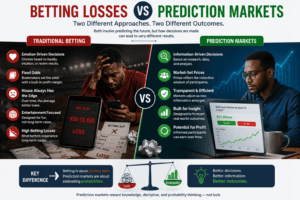
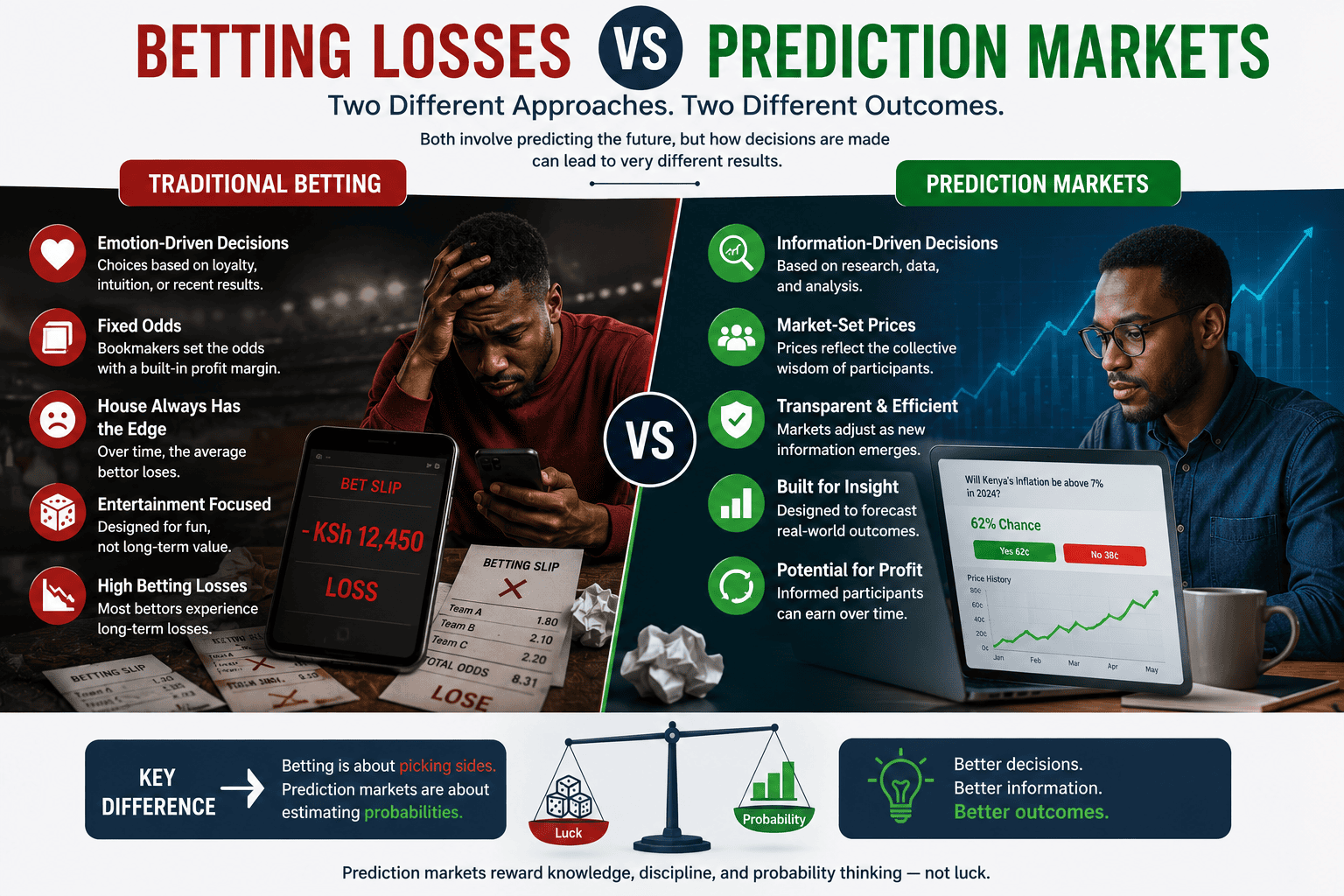
Betting Losses vs Prediction Markets
Primary Keyword: betting losses Kenya Secondary Keywords: prediction advantage, forecasting vs gambling, probability decisions Goal: Trust SEO Description: Learn the difference between betting and prediction markets by exploring how information, probabilities, and disciplined decision-making influence outcomes. Understand why forecasting focuses on evidence rather than chance. Betting Losses vs Prediction Markets Conversations about prediction markets often…
-
Will Food Prices Rise in Kenya?
Food prices are one of the clearest ways people experience the economy. Inflation figures can feel abstract until the price of maize flour, cooking oil, vegetables, or sugar changes. Then the numbers become real. Households notice immediately, businesses adjust budgets, and conversations at local markets often sound a bit different. It doesn’t take long. So,…
-
Top Prediction Opportunities Right Now
Prediction markets tend to become most active when uncertainty is high but information continues to arrive. That’s where forecasting becomes interesting. New data changes probabilities, opinions evolve, and markets adjust accordingly. Not every headline creates a meaningful prediction opportunity, though. The best forecasting markets usually share a few characteristics. They’re tied to measurable outcomes, attract…
-
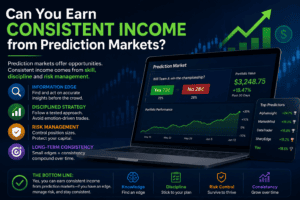
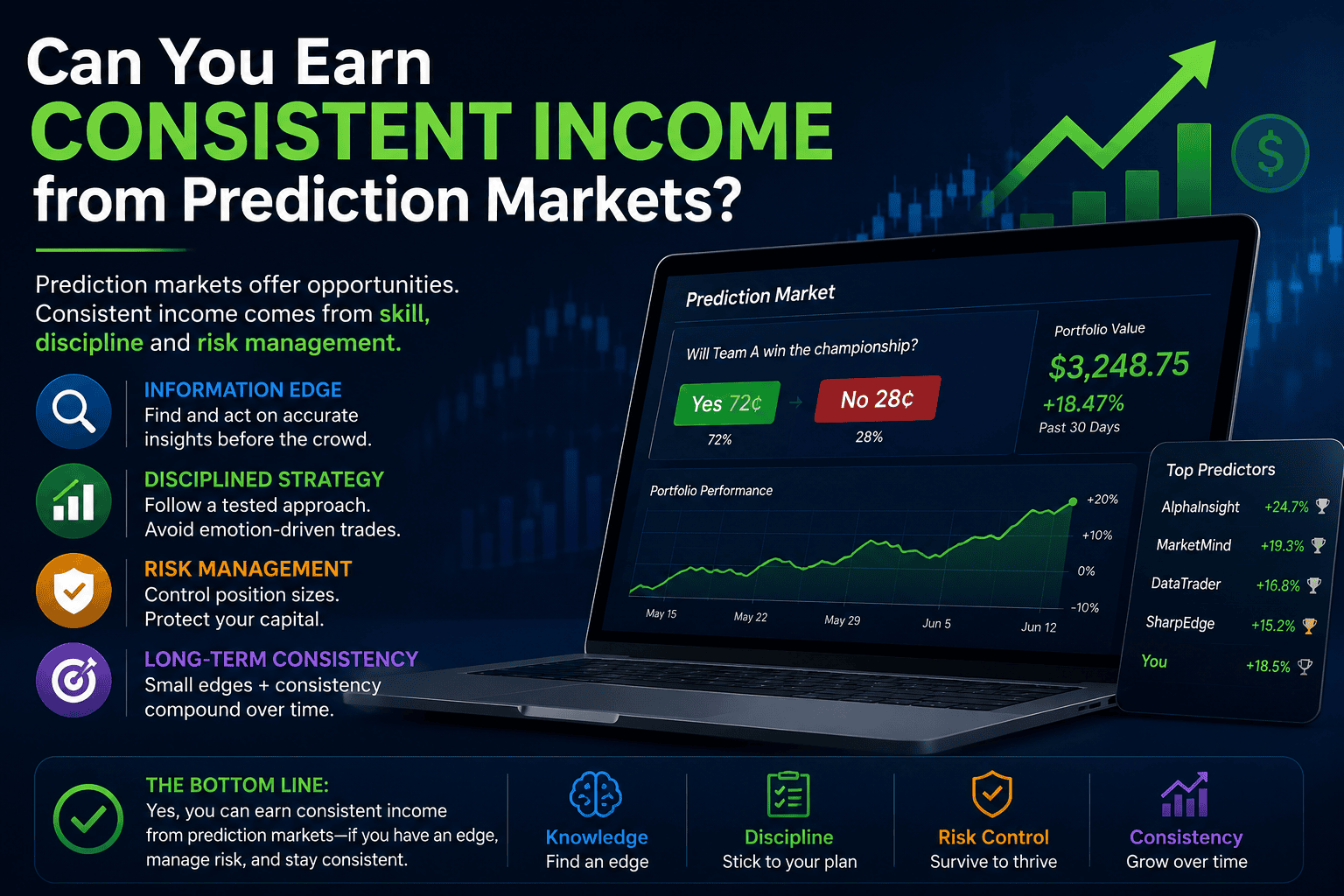
Can You Earn Consistent Income from Prediction Markets?
Prediction markets have attracted growing attention over the past few years. Some participants view them as an alternative investment. Others see them as information markets that reward accurate forecasting. And, naturally, there are people who arrive hoping to generate a steady income. The question is understandable. Can someone realistically earn consistent income from prediction markets?…
-
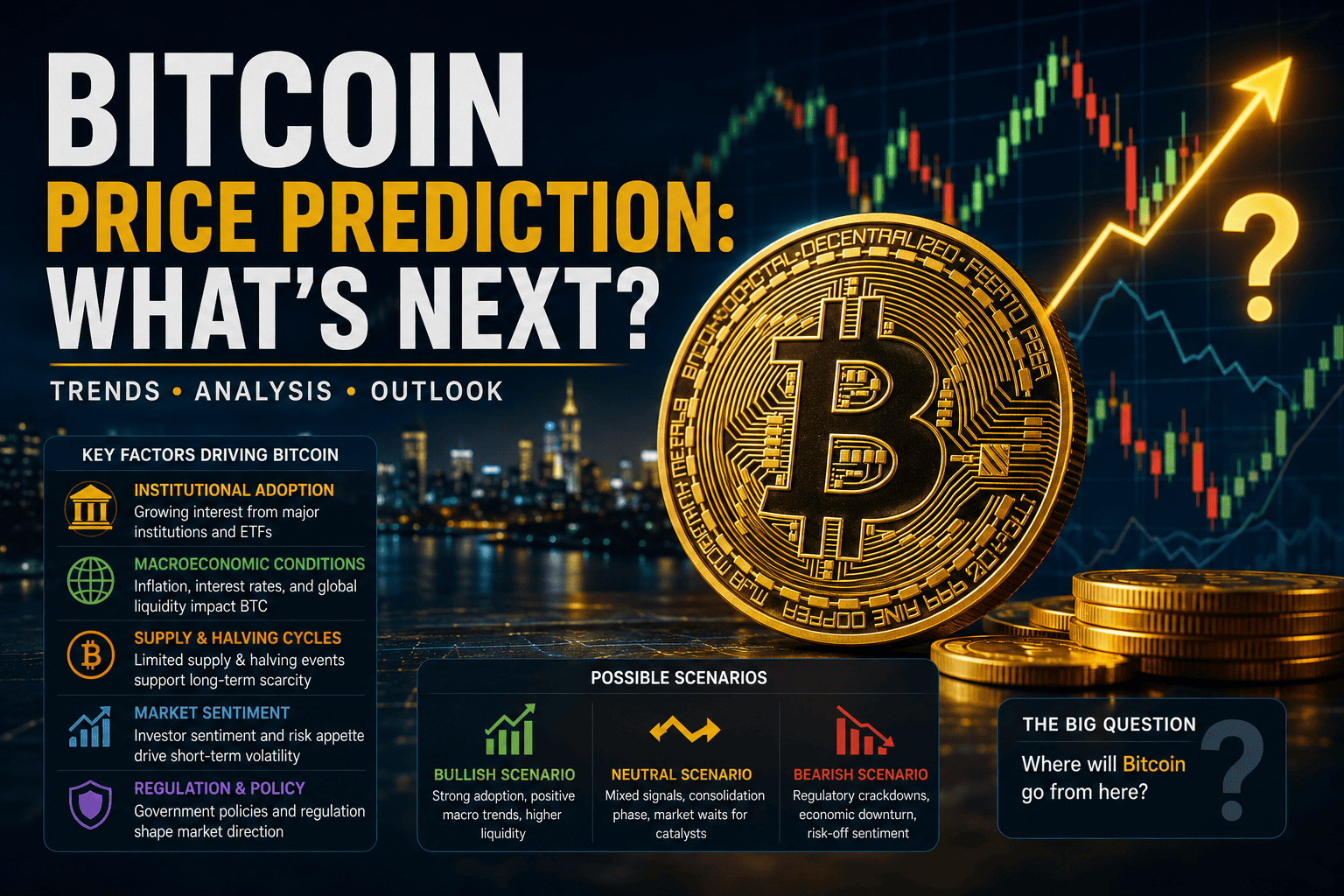
Bitcoin Price Prediction: What’s Next?
Bitcoin has reached the point where it is no longer viewed solely as a niche digital asset. Governments monitor it. Large financial institutions offer investment products linked to it. Public companies hold it on their balance sheets, and central banks increasingly acknowledge that cryptocurrencies have become a permanent part of the global financial landscape. That…
-
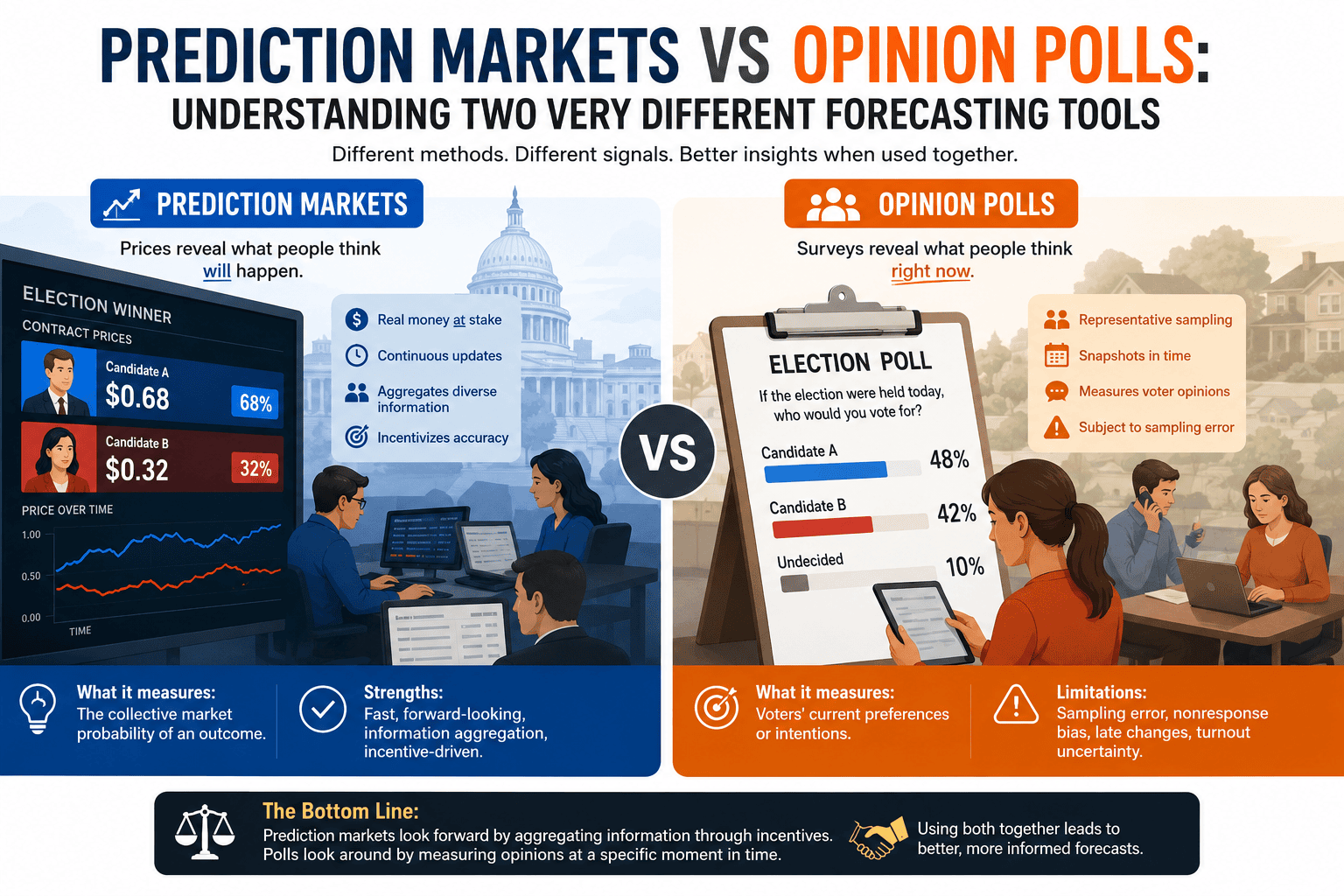
Prediction Markets vs Opinion Polls: Understanding Two Very Different Forecasting Tools
Election seasons are filled with polls, probability charts, expert commentary, and increasingly, prediction markets. While both prediction markets and opinion polls aim to provide insight into future election outcomes, they work in fundamentally different ways. Opinion polls ask voters what they intend to do. Prediction markets ask participants what they believe will happen, often requiring…
-
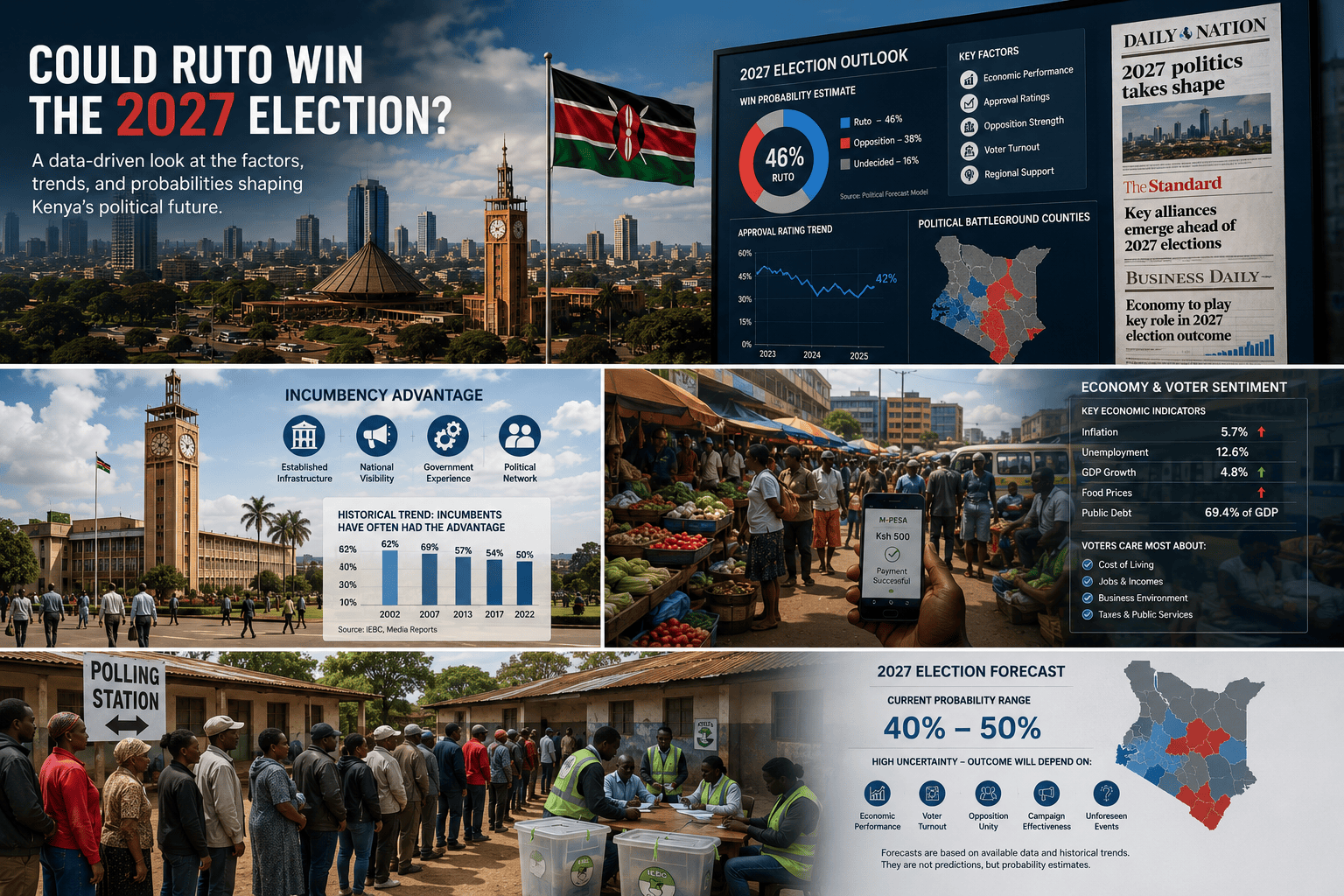
Could Ruto Win the 2027 Election?
Kenya’s next general election remains some distance away, but discussion around the 2027 presidential race has already begun. That isn’t particularly unusual. Kenyan politics tends to operate on long timelines, where alliances, defections, and campaign positioning begin years before voters actually cast their ballots. One question appears repeatedly: Could President William Ruto win re-election in…
-
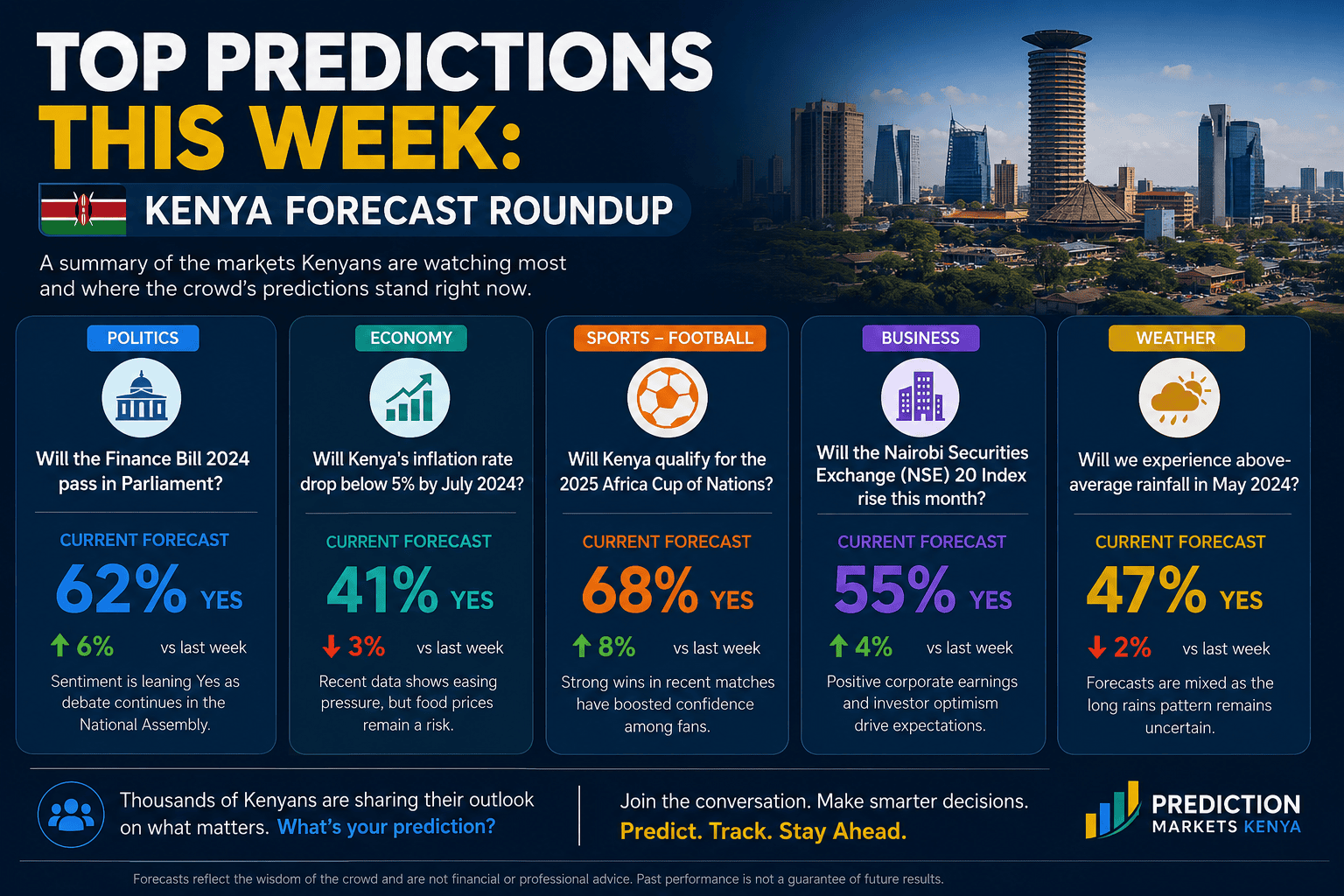
Top Predictions This Week: Kenya Forecast Roundup
Kenya rarely has a quiet week. Fuel prices move, the shilling reacts to global markets, football fans argue about matches that haven’t happened yet, and politicians begin positioning themselves for events still months away. Most forecasts turn out partly right and partly wrong. That’s normal. The interesting part is understanding why a forecast exists in…
-
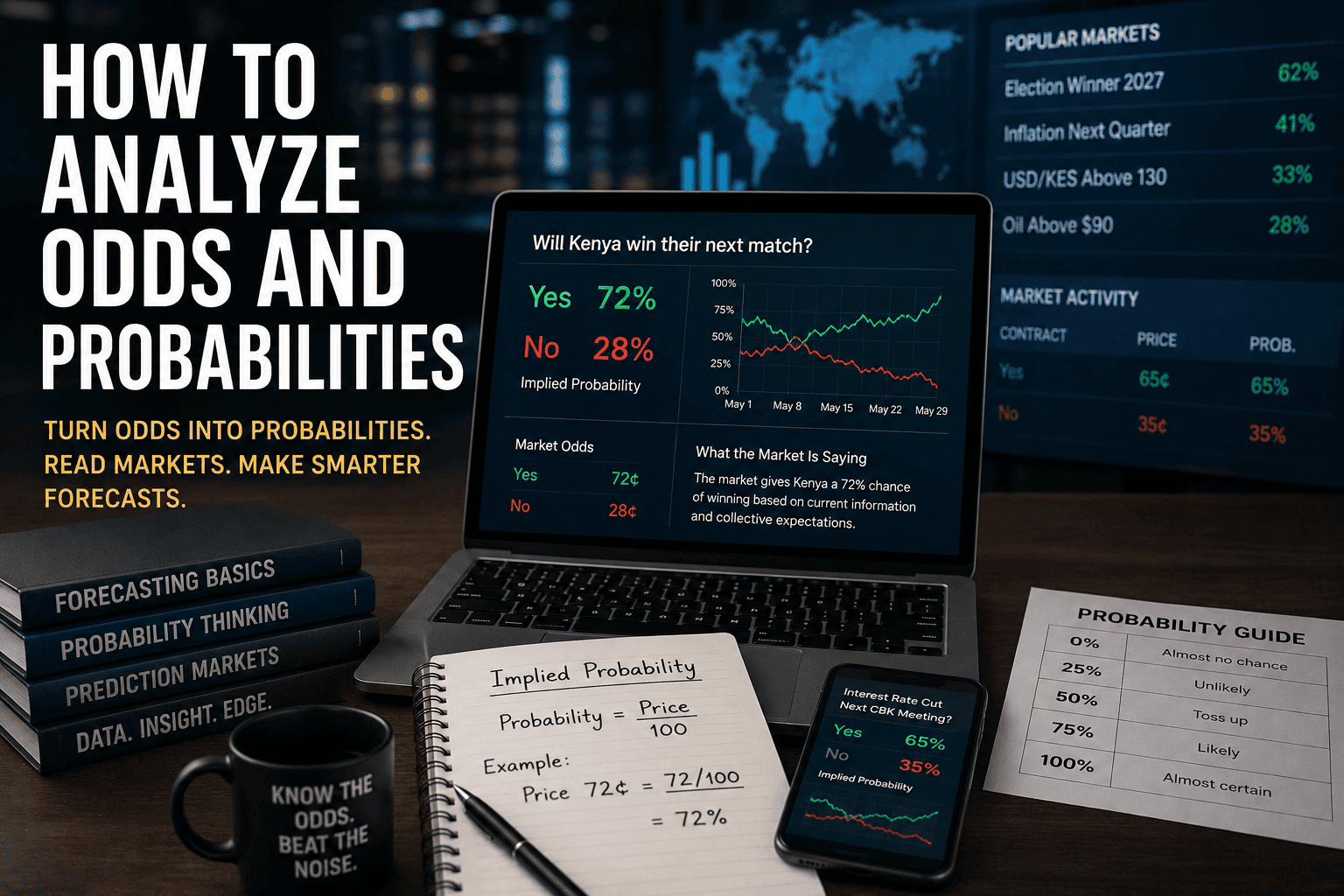
How to Analyze Odds and Probabilities in Prediction Markets
If you’ve ever looked at a prediction market and wondered why one outcome is trading at 72% while another sits at 28%, you’re not alone. At first glance, those numbers seem straightforward. Higher percentage means more likely. Lower percentage means less likely. That’s true, but it’s only part of the story. What those probabilities really…

Latest Articles


Search the Archives
Access over the years of journalism and breaking reports
You May Have Missed