
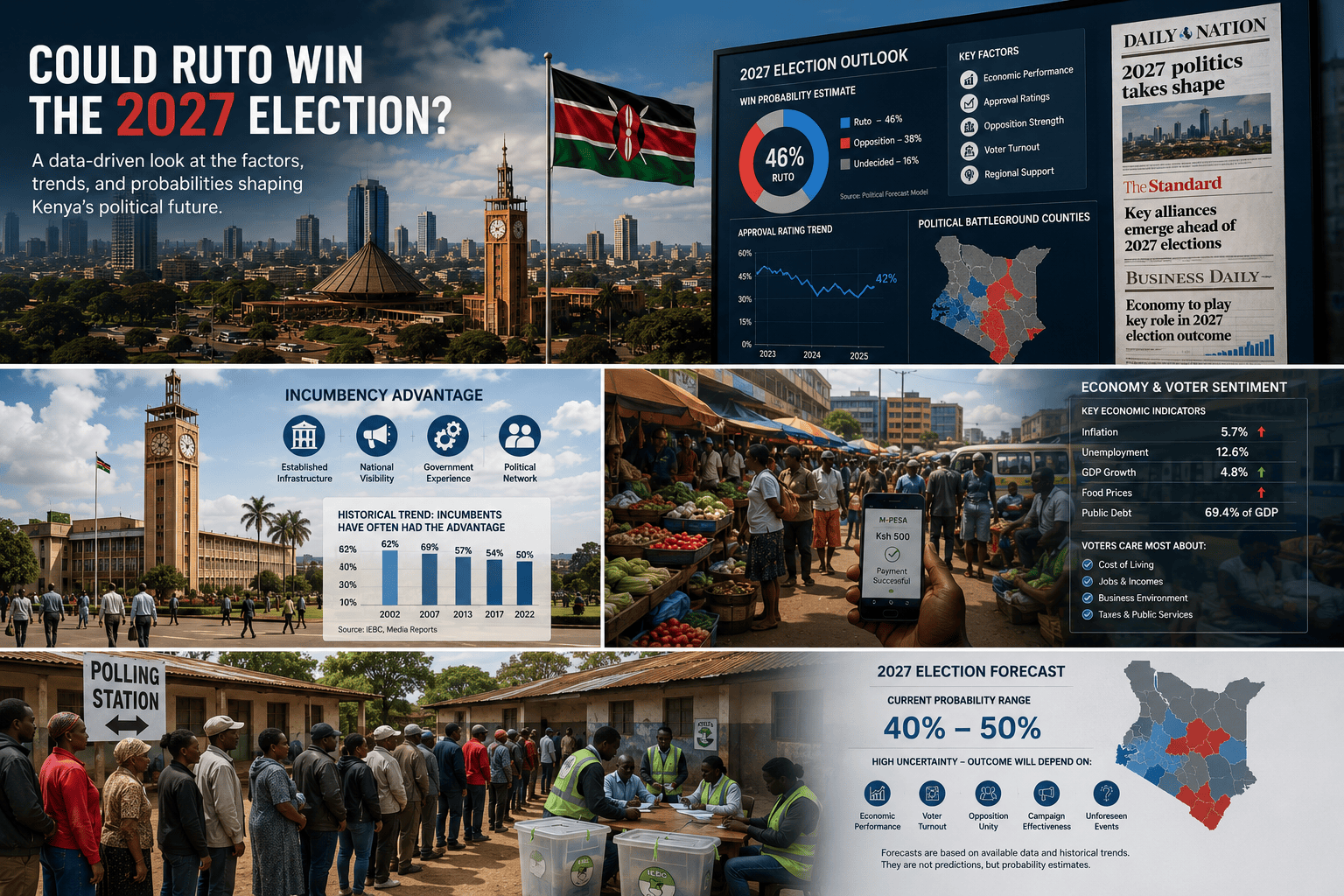
Kenya’s next general election remains some distance away, but discussion around the 2027 presidential race has already begun. That isn’t particularly unusual. Kenyan politics tends to operate on long timelines, where alliances, defections, and campaign positioning begin years before voters actually cast their ballots.
One question appears repeatedly: Could President William Ruto win re-election in 2027?
There isn’t a definitive answer today. Elections are shaped by economic conditions, political coalitions, voter turnout, campaign effectiveness, and events that are often impossible to predict several years in advance.
Still, forecasting isn’t about certainty. It’s about identifying the variables that are most likely to influence the outcome and evaluating how they interact.
Table of Contents
Incumbency Remains a Significant Advantage
Historically, incumbents enter elections with structural advantages.
These typically include:
- Greater national visibility
- Established party infrastructure
- Existing campaign networks
- Government experience
- Easier access to nationwide political organization
In Kenya, incumbency has often been an important factor in presidential elections, although it has never guaranteed victory.
Governments are judged on their performance, and those same advantages can become liabilities if public dissatisfaction grows.
Incumbency provides a stronger starting position, not an assured result.
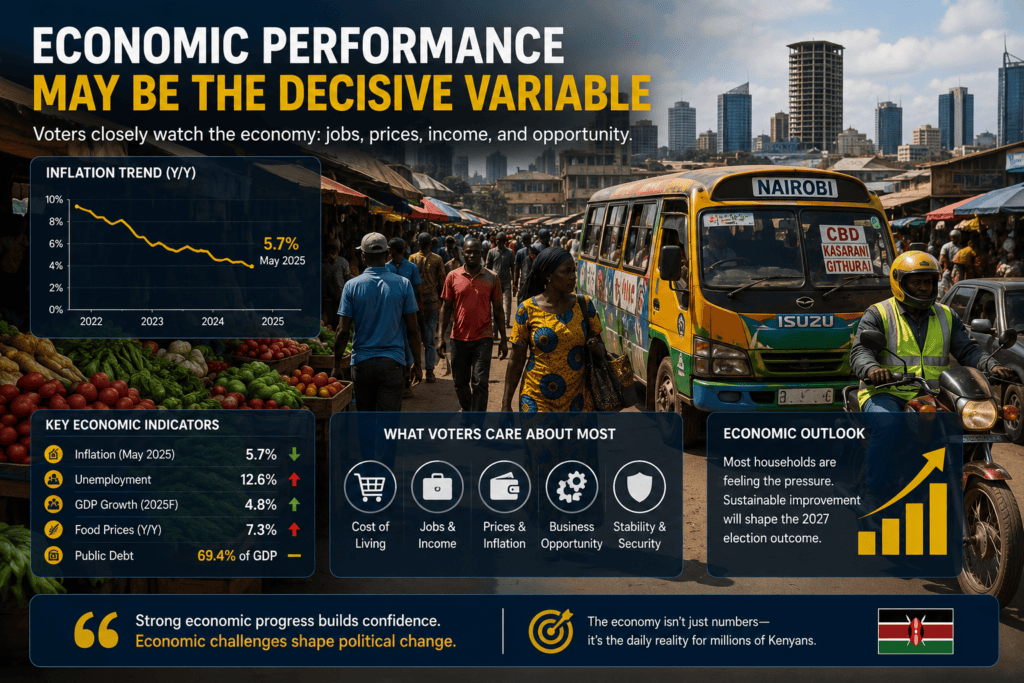
Economic Performance May Be the Decisive Variable
Economic conditions frequently influence election outcomes across democracies, and Kenya is no exception.
Voters tend to pay close attention to issues that affect everyday life, including:
- Inflation
- Food prices
- Employment opportunities
- Household incomes
- Fuel costs
- Taxation
- Business confidence
If economic indicators improve steadily before 2027, the incumbent government may benefit from increased public confidence.
Conversely, persistent economic challenges could strengthen calls for political change.
It’s worth noting that national economic statistics don’t always match individual experiences. GDP growth, for example, may improve while many households still feel financial pressure.
That gap often shapes political narratives.
Approval Ratings Matter—but They Change
Opinion polls provide useful snapshots of public sentiment.
They do not provide election results.
Approval ratings often fluctuate because of:
- Government policy decisions
- Economic developments
- Public demonstrations
- Corruption allegations
- Security issues
- Major national events
Political forecasting generally places more emphasis on long-term trends than isolated polls.
A single survey showing higher or lower approval tells us relatively little without understanding whether it reflects a broader pattern.
Momentum matters more than individual data points.
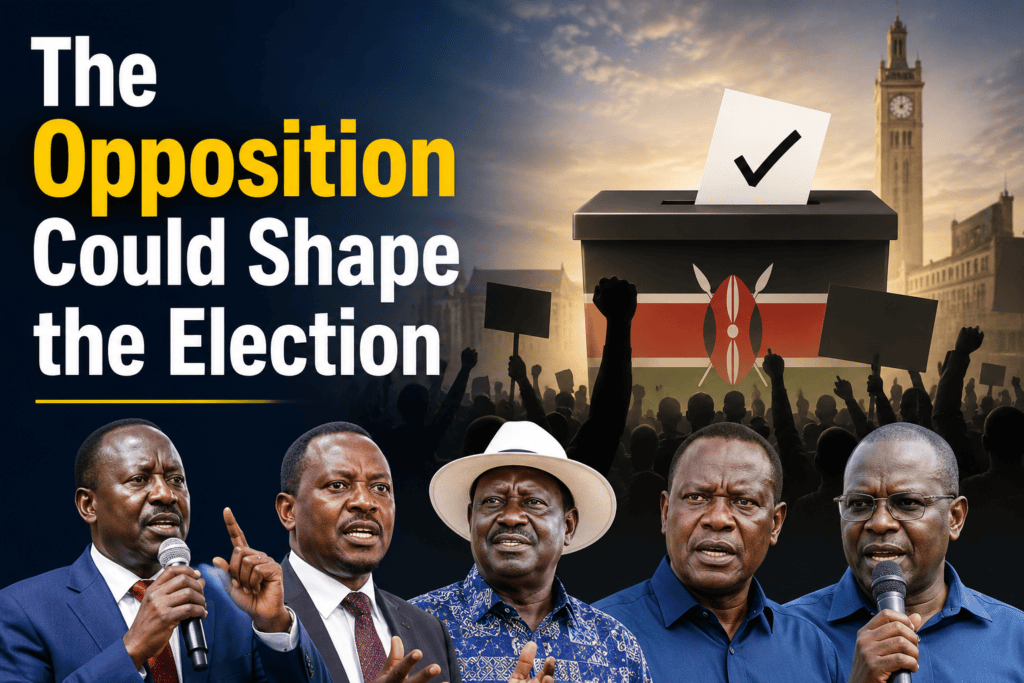
The Opposition Could Shape the Election
An incumbent’s prospects depend not only on government performance but also on the strength of competing candidates.
Several questions remain unresolved:
- Will opposition parties unite?
- Will multiple candidates divide the opposition vote?
- Can new political figures emerge?
- Will regional alliances shift?
Kenyan elections have often been influenced by coalition-building.
Broad political alliances have historically increased competitiveness, while fragmented opposition movements have sometimes struggled to consolidate support.
The composition of the opposition in 2027 may ultimately prove just as important as the incumbent’s own campaign.
Regional Voting Patterns Continue to Matter
Kenya’s electoral geography has historically played a major role in presidential elections.
Candidates typically seek to:
- Consolidate traditional support bases.
- Expand into competitive counties.
- Increase turnout among existing supporters.
- Build cross-regional coalitions.
No single region determines the election independently.
Instead, presidential victories usually result from assembling broad national support across multiple parts of the country.
Political alliances before the election often reflect this strategic reality.
Government Delivery Will Be Closely Scrutinized
Election campaigns frequently revolve around promises.
Re-election campaigns usually focus on delivery.
Between now and 2027, voters are likely to assess progress in areas such as:
- Infrastructure development
- Healthcare
- Education
- Agriculture
- Affordable housing
- Job creation
- Public debt management
- Cost of living
Different voter groups naturally prioritize different issues.
Urban voters may focus more on employment and business conditions.
Rural communities may place greater emphasis on agriculture, roads, or access to public services.
Neither perspective is inherently more important. Together they shape the national picture.
Youth Voters Could Become Increasingly Influential
Kenya has one of Africa’s youngest populations.
That demographic reality continues to influence electoral politics.
Issues commonly affecting younger voters include:
- Employment opportunities
- Entrepreneurship
- Digital economy growth
- Education
- Housing affordability
- Government accountability
Youth turnout could become an important variable in 2027.
High participation among younger voters has the potential to alter electoral dynamics, particularly if voting preferences differ from older age groups.
Forecasting models often monitor demographic participation alongside polling data.

Campaigns Can Change Rapidly
Political forecasting several years before an election carries substantial uncertainty.
Unexpected developments may significantly reshape the race, including:
- Cabinet changes
- Coalition realignments
- Economic shocks
- Court rulings
- Security events
- International developments
- Emergence of new political leaders
History shows that presidential races rarely unfold exactly as analysts expect several years in advance.
Forecasts therefore become more reliable as election day approaches and more data becomes available.
Ruto Election Prediction
Based on current information, any responsible Ruto election prediction should remain cautious.
Several factors strengthen President William Ruto’s position:
- Incumbency
- Established national political network
- Government visibility
- Existing campaign infrastructure
At the same time, meaningful uncertainties remain:
- Economic performance over the next several years
- Public approval trends
- Opposition unity
- Coalition formation
- Voter turnout
- Unforeseen political developments
Taken together, these variables suggest that President Ruto should be considered a credible contender for re-election rather than an inevitable winner or a clear underdog.
The outcome remains contingent on events that have yet to unfold.
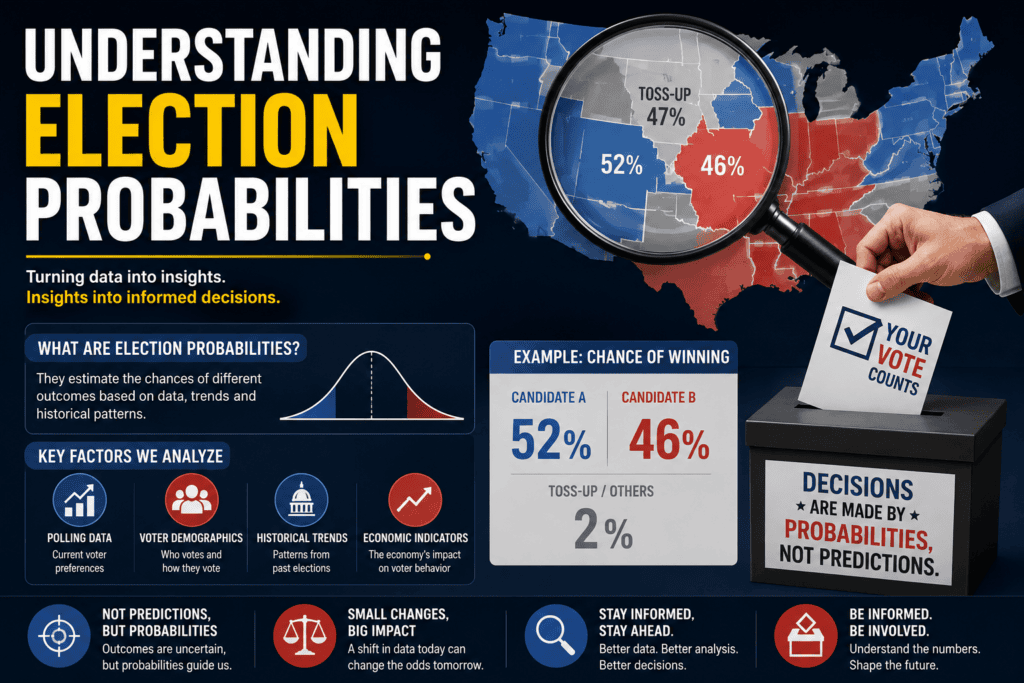
Understanding Election Probabilities
When analysts discuss election probabilities, they are not claiming certainty.
A probability reflects the likelihood of an outcome based on current information, while recognizing that new evidence can change the assessment.
Political forecasting differs from political advocacy.
The objective is not to support a candidate or predict with absolute confidence. Instead, it is to evaluate available evidence systematically, acknowledge uncertainty, and update expectations as new data emerges.
That approach is particularly important in democratic elections, where campaigns evolve, voter preferences shift, and unexpected developments can alter the political landscape over relatively short periods.