

Bitcoin has reached the point where it is no longer viewed solely as a niche digital asset. Governments monitor it. Large financial institutions offer investment products linked to it. Public companies hold it on their balance sheets, and central banks increasingly acknowledge that cryptocurrencies have become a permanent part of the global financial landscape.
That doesn’t mean predicting Bitcoin has become easy.
In fact, the opposite is probably true.
As Bitcoin becomes more connected to the broader financial system, its price responds to a wider range of variables than it did a decade ago. Interest rates, global liquidity, institutional flows, regulation, and investor sentiment now interact in ways that make simple predictions increasingly unreliable.
Rather than asking where Bitcoin will trade, a better question is what conditions make different outcomes more likely.
Table of Contents
Bitcoin Has Historically Moved in Cycles
One of the most discussed characteristics of Bitcoin is its tendency to move through long market cycles.
Historically, these phases have included:
- Extended accumulation periods
- Strong bull markets
- Sharp corrections
- Multi-month consolidations
While every cycle has been different, Bitcoin has repeatedly experienced significant price volatility.
Past performance does not guarantee future results.
Still, historical cycles provide useful context when evaluating the current market.
Markets rarely repeat perfectly, but they often rhyme.
Institutional Adoption Has Changed the Market
Perhaps the biggest structural change over the past several years has been institutional participation.
Bitcoin is increasingly held by:
- Asset managers
- Public companies
- Investment funds
- Pension-related investment vehicles
- Wealth management firms
Institutional investors often operate differently from retail traders.
They typically evaluate:
- Portfolio diversification
- Long-term risk
- Liquidity
- Regulatory clarity
- Macroeconomic conditions
Greater institutional ownership may reduce certain types of speculation while increasing Bitcoin’s sensitivity to broader financial markets.
That wasn’t always the case.
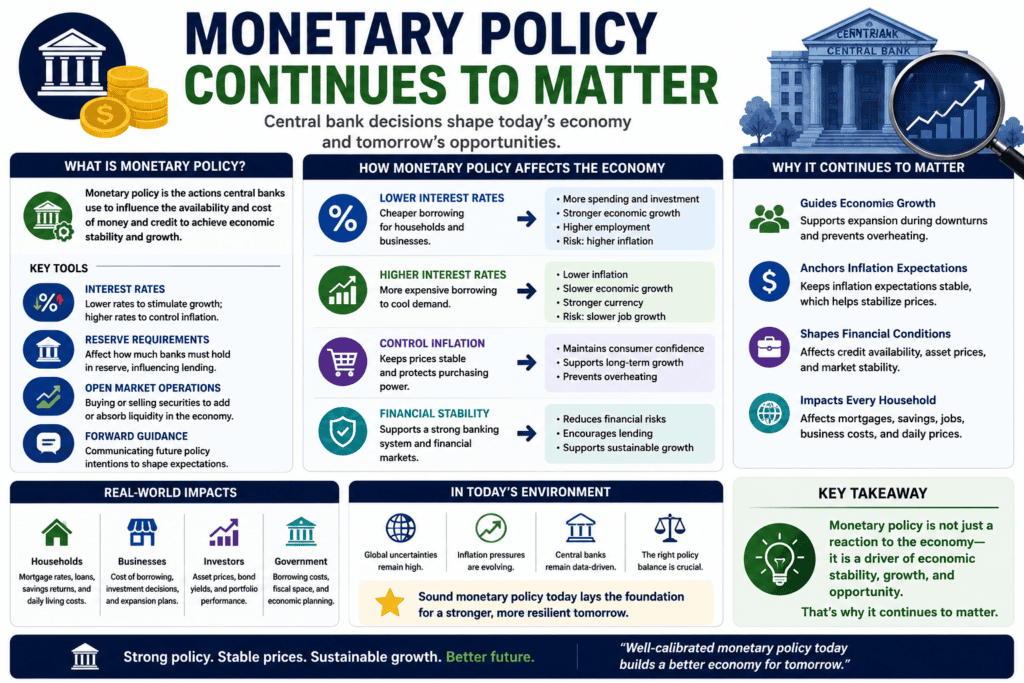
Monetary Policy Continues to Matter
Interest rates remain one of the most important variables affecting financial markets.
When central banks maintain higher interest rates:
- Borrowing becomes more expensive.
- Liquidity tends to decline.
- Investors often become more selective about risk assets.
When monetary policy becomes more accommodative, investor appetite for higher-risk assets—including cryptocurrencies—has historically strengthened.
Bitcoin is not driven exclusively by interest rates.
However, macroeconomic conditions increasingly influence its performance.
Supply Remains Relatively Predictable
Unlike many traditional assets, Bitcoin’s supply schedule is known in advance.
New Bitcoin enters circulation according to predetermined rules encoded into the network.
This predictable issuance has contributed to Bitcoin’s reputation as a scarce digital asset.
Supply dynamics are periodically affected by Bitcoin’s halving events, during which the reward paid to miners for validating new blocks is reduced.
Historically, halving cycles have often preceded periods of stronger price appreciation, although the relationship is not deterministic.
Markets generally anticipate known events well before they occur.
Demand Ultimately Determines Price
Predictable supply does not guarantee rising prices.
Demand remains equally important.
Factors influencing Bitcoin demand include:
- Institutional investment
- Retail participation
- Regulatory developments
- Payment adoption
- Exchange-traded products
- Global economic uncertainty
If demand expands faster than available supply, upward price pressure becomes more likely.
Conversely, weakening demand can produce substantial declines despite Bitcoin’s limited supply.
Regulation Will Continue Shaping the Market
Regulatory clarity remains one of the most significant uncertainties.
Governments continue developing policies covering:
- Crypto exchanges
- Stablecoins
- Taxation
- Anti-money laundering requirements
- Consumer protection
- Institutional investment frameworks
Clear regulation can increase investor confidence by reducing legal uncertainty.
Restrictive regulation, however, may temporarily reduce participation or increase market volatility.
Regulation does not necessarily determine Bitcoin’s long-term direction, but it often influences short-term market sentiment.
Market Sentiment Can Move Faster Than Fundamentals
Cryptocurrency markets remain highly sentiment-driven.
Positive sentiment may be influenced by:
- Institutional buying announcements
- Technological developments
- Regulatory progress
- Strong macroeconomic conditions
Negative sentiment may emerge from:
- Security breaches
- Regulatory uncertainty
- Macroeconomic stress
- Large liquidations
- Global financial instability
Sentiment can change rapidly.
Markets occasionally react to expectations rather than confirmed developments.
That’s one reason Bitcoin frequently experiences larger short-term swings than traditional financial assets.
Competition Within the Digital Asset Market
Bitcoin remains the largest cryptocurrency by market capitalization, but it operates within a broader ecosystem.
Developments involving:
- Ethereum
- Stablecoins
- Tokenized financial assets
- Central bank digital currencies
- Blockchain infrastructure
may indirectly affect Bitcoin’s adoption and investment narrative.
Some investors view Bitcoin primarily as digital gold.
Others see it as part of a wider digital asset economy.
These differing perspectives influence demand over time.
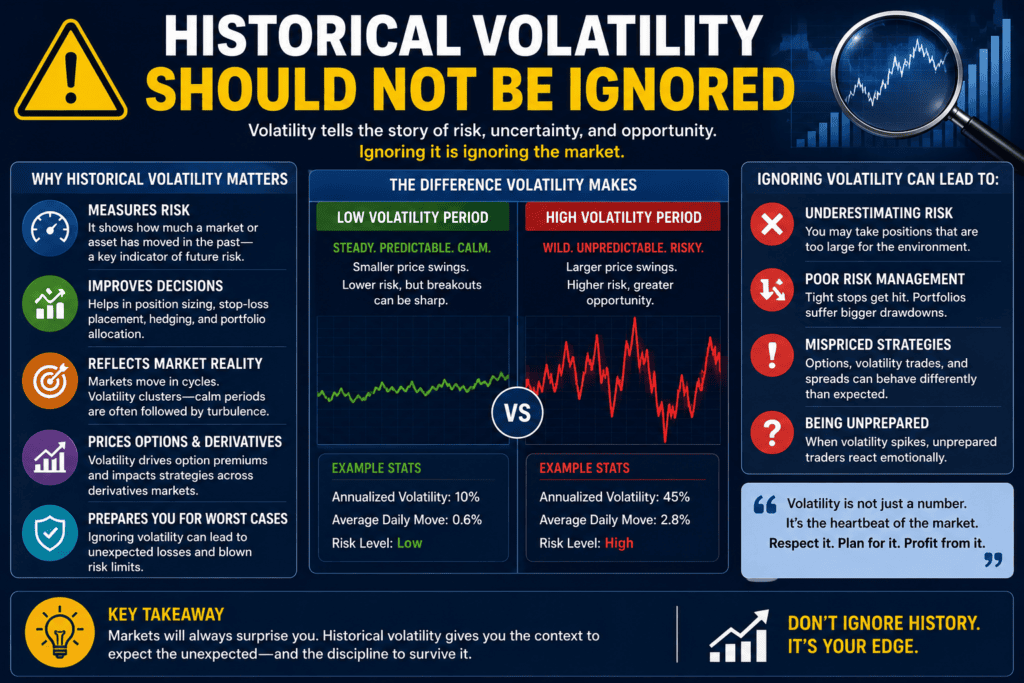
Historical Volatility Should Not Be Ignored
Bitcoin has historically delivered periods of exceptional returns.
It has also experienced multiple declines exceeding 50%.
That volatility remains one of its defining characteristics.
Long-term investors often focus on multi-year trends.
Short-term traders may be more sensitive to daily price fluctuations.
Neither perspective is inherently correct.
They simply operate over different investment horizons.
Bitcoin Forecast
Any responsible Bitcoin forecast should acknowledge uncertainty rather than offering precise price targets.
Current evidence suggests several supportive factors:
- Growing institutional participation
- Limited long-term supply growth
- Increasing financial market integration
- Continued global recognition of digital assets
Offsetting risks include:
- Macroeconomic tightening
- Regulatory uncertainty
- Reduced investor risk appetite
- High market volatility
- Unexpected geopolitical developments
Taken together, these factors suggest Bitcoin continues to possess long-term growth potential while remaining vulnerable to substantial short-term price fluctuations.
The probability of continued volatility remains high.
Understanding Cryptocurrency Trends
Forecasting cryptocurrency trends differs from predicting individual price movements.
Analysts generally examine:
- Capital flows
- Market liquidity
- On-chain activity
- Institutional participation
- Macroeconomic indicators
- Investor positioning
No single indicator consistently predicts future prices.
Reliable forecasting instead combines multiple sources of information while recognizing the limits of prediction.
Markets evolve continuously as new information becomes available.