
Learn what prediction markets are, how they work, and how Kenyans can use them to forecast events and make smarter decisions.
Prediction markets are one of the fastest-growing trends globally—but in Kenya, very few people fully understand how they work.
In simple terms, a prediction market is a platform where people trade on the outcome of real-world events. These events can include elections, fuel prices, sports results, cryptocurrency trends, and even global news.
Instead of just guessing what will happen, users buy and sell probabilities based on what they believe is most likely to occur. Platforms like Polymarket have helped popularize this concept by making forecasting simple and accessible.
Table of Contents
How Prediction Markets Work
Let’s break it down with a simple example:
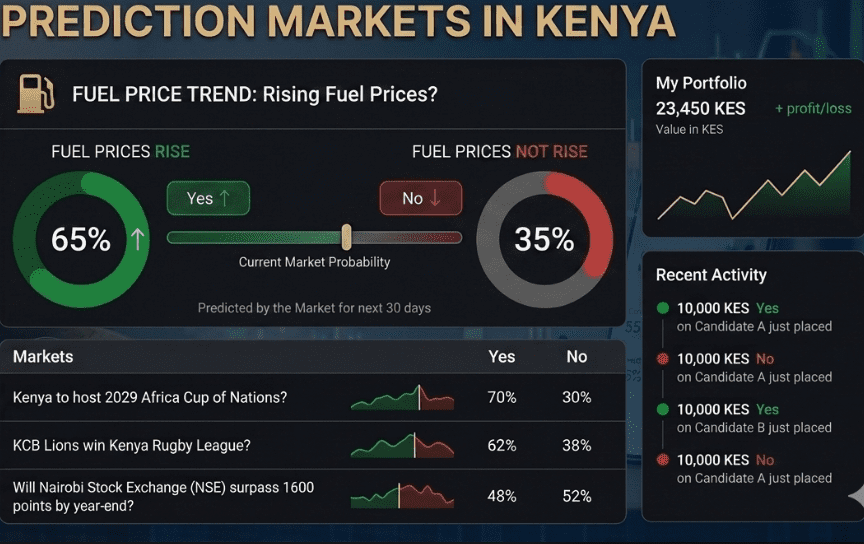
Question: Will fuel prices increase in Kenya next month?
📊 Prediction Box
- YES: 60%
- NO: 40%
This means the market believes there is a 60% probability that fuel prices will go up.
How You Participate
- If you think YES should be higher → you buy YES
- If you think NO is undervalued → you buy NO
If your prediction is correct, you earn a profit
If you’re wrong, you lose your stake
As more people trade, probabilities update in real time.
Why Prediction Markets Matter
Prediction markets combine information, incentives, and real-world outcomes.
1. They Aggregate Public Opinion
They combine insights from many people, not just one expert.
2. They Reward Accuracy
People use real money, so they are motivated to be correct.
3. They Can Outperform Experts
Prediction markets often beat:
- Polls
- Analysts
- Forecast reports
4. They Provide Real-Time Insights
Markets update instantly as new data becomes available.
Real-Life Examples in Kenya
Prediction markets can be applied to everyday Kenyan issues:
- ⛽ Fuel prices
- 💱 Kenyan shilling performance
- 🗳️ Elections (2027)
- ⚽ Football (EPL matches)
These are topics Kenyans already care about—prediction markets just make them measurable.
- Will Fuel Prices Hit Ksh 250 in 2026?
- Will the Kenyan Shilling Recover in 2026?
- Will Arsenal Win the Premier League?
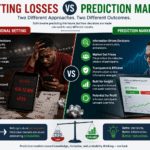
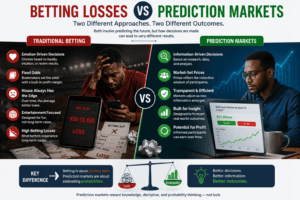
Prediction Markets vs Betting
At first glance, prediction markets may look like betting—but they are very different.
Prediction Markets:
- Based on data and probabilities
- Driven by users and market forces
- Reward analysis and research
Betting:
- Odds set by bookmakers
- More entertainment-focused
- Less data-driven
Prediction markets are closer to trading or investing than gambling.
- Prediction Markets vs Betting: What’s the Difference?
Prediction markets are more than just a new idea—they represent a shift toward data-driven thinking.
They help people:
- Understand risk
- Make better decisions
- Stay ahead of trends