
Kenya rarely has a quiet week. Fuel prices move, the shilling reacts to global markets, football fans argue about matches that haven’t happened yet, and politicians begin positioning themselves for events still months away. Most forecasts turn out partly right and partly wrong. That’s normal. The interesting part is understanding why a forecast exists in the first place.
This week’s Kenya predictions weekly roundup looks at five major areas that affect households, businesses, and investors: fuel prices, inflation, the currency market, sports, and politics. These probability estimates are not certainties. They are simply attempts to measure uncertainty using available information.
Table of Contents
1. Fuel Prices Will Remain Stable or Increase Slightly
Probability: 65%
Fuel remains one of the most watched indicators in Kenya because its effects spread quickly through transport, food prices, and business operating costs.
Several factors currently point toward either stable prices or a modest increase during the next pricing cycle. Global crude oil prices have remained relatively elevated compared to earlier months, although they continue to fluctuate based on geopolitical developments and production decisions by major oil-producing countries.
The USD/KES exchange rate also matters. Kenya imports its petroleum products in dollars, so even small currency movements can influence the final pump price.
Recent trends suggest that while dramatic increases appear unlikely, downward pressure is also limited. The combination of moderate oil prices and a relatively stable shilling creates conditions for only minor adjustments.
Forecast: Fuel prices either remain unchanged or increase by less than KES 5 per litre.
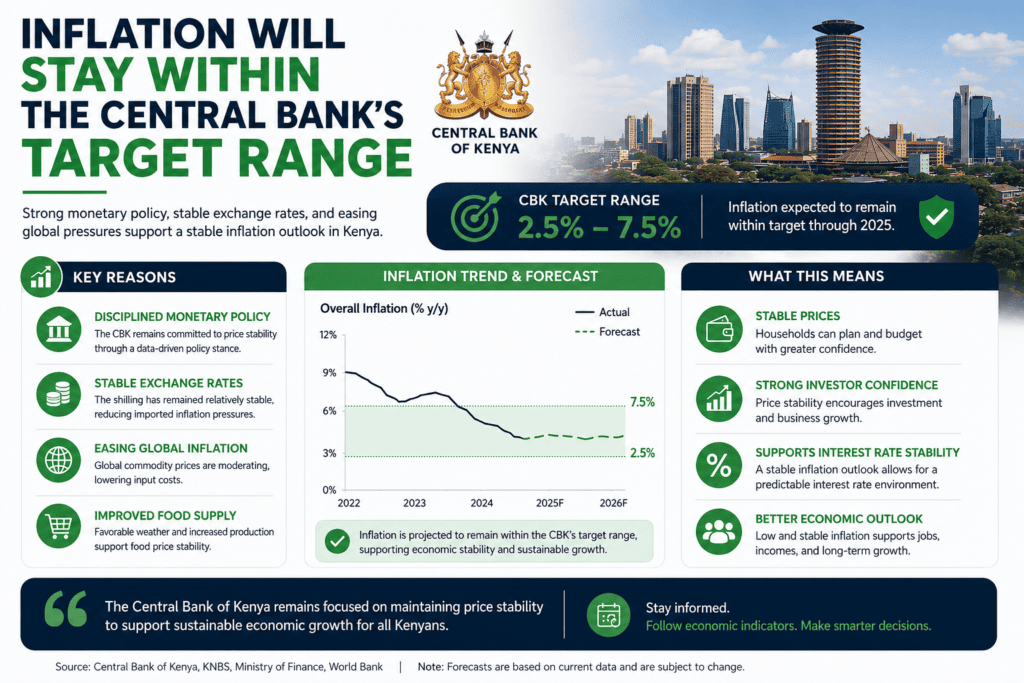
2. Inflation Will Stay Within the Central Bank’s Target Range
Probability: 75%
Kenya’s inflation environment has been relatively stable compared to some previous years. Food prices remain the biggest risk, especially if weather conditions affect agricultural output.
A quick walk through any Nairobi supermarket still reveals occasional price jumps. Tomatoes can surprise people. Cooking oil too. But overall inflation indicators have remained contained.
The Central Bank of Kenya continues to maintain a cautious monetary stance, which has helped anchor inflation expectations.
Several factors support this forecast:
- Stable fuel costs compared to previous spikes
- Improved agricultural production in some regions
- Reduced exchange rate volatility
- Moderating imported inflation pressures
Forecast: Annual inflation remains within the CBK target band over the coming month.
3. The Kenyan Shilling Will Trade in a Narrow Range
Probability: 70%
Just over a year ago, currency forecasts dominated economic discussions. The situation looks much calmer today.
Foreign exchange reserves remain healthier than during previous periods of pressure, while tourism earnings, remittances, and export revenues continue to provide support.
That does not mean the shilling cannot weaken. It can. Global financial conditions change quickly and investors tend to react to interest rate decisions in major economies.
Still, the current evidence suggests limited volatility.
Forecast: USD/KES remains within a relatively narrow trading band during the coming week.
4. Harambee Stars Will Avoid Defeat in Their Next Competitive Fixture
Probability: 55%
Sports forecasting is often humbling. Teams ignore probabilities all the time.
Still, Kenya’s recent performances suggest increasing competitiveness against similarly ranked opponents. Defensive organization has improved in several matches, although consistency remains a challenge.
Football forecasts involve more uncertainty than economic forecasts because a red card, penalty, or individual mistake can change everything within minutes.
The probability here is intentionally moderate rather than aggressive.
Forecast: Harambee Stars earn either a win or draw in their next major competitive match.
5. Political Realignments Will Generate Significant Headlines
Probability: 80%
Kenyan politics rarely stays still for long.
Even when elections appear distant, coalition discussions, party movements, endorsements, and public disagreements continue shaping the political landscape. Recent months have shown increased activity among political leaders seeking to strengthen their influence ahead of future electoral contests.
Much of this activity may not immediately change policy outcomes. However, it influences public expectations and investor sentiment.
One thing worth noting is that political headlines tend to arrive in clusters. There can be several quiet days, then suddenly everyone seems to be holding a press conference.
Forecast: At least one major political development or alliance-related announcement generates national attention during the coming week.

Kenya Prediction Roundup: Weekly Forecast Summary
| Forecast | Probability |
|---|---|
| Fuel prices remain stable or rise slightly | 65% |
| Inflation stays within target range | 75% |
| Shilling trades in narrow range | 70% |
| Harambee Stars avoid defeat | 55% |
| Major political headline emerges | 80% |
Average forecast confidence across this week’s outlook stands at approximately 69%.
What to Watch This Week
The biggest variable in this week’s market outlook Kenya remains fuel pricing. Energy costs influence inflation, transportation expenses, and business margins across multiple sectors. Any unexpected movement in global oil markets could quickly affect the broader economic outlook.
Currency stability is the second major indicator worth monitoring. Continued exchange rate stability would reinforce current inflation forecasts and support business planning decisions.
As always, forecasts are best viewed as probabilities rather than predictions of certainty. The purpose is not to claim knowledge of the future. It is to better understand the range of outcomes that appear most likely based on current evidence.
That’s what makes forecasting useful. Not being right all the time. Just being slightly less surprised than everyone else when events unfold.